
What a 900-Year-Old Monastery Taught Me About Fitness Design
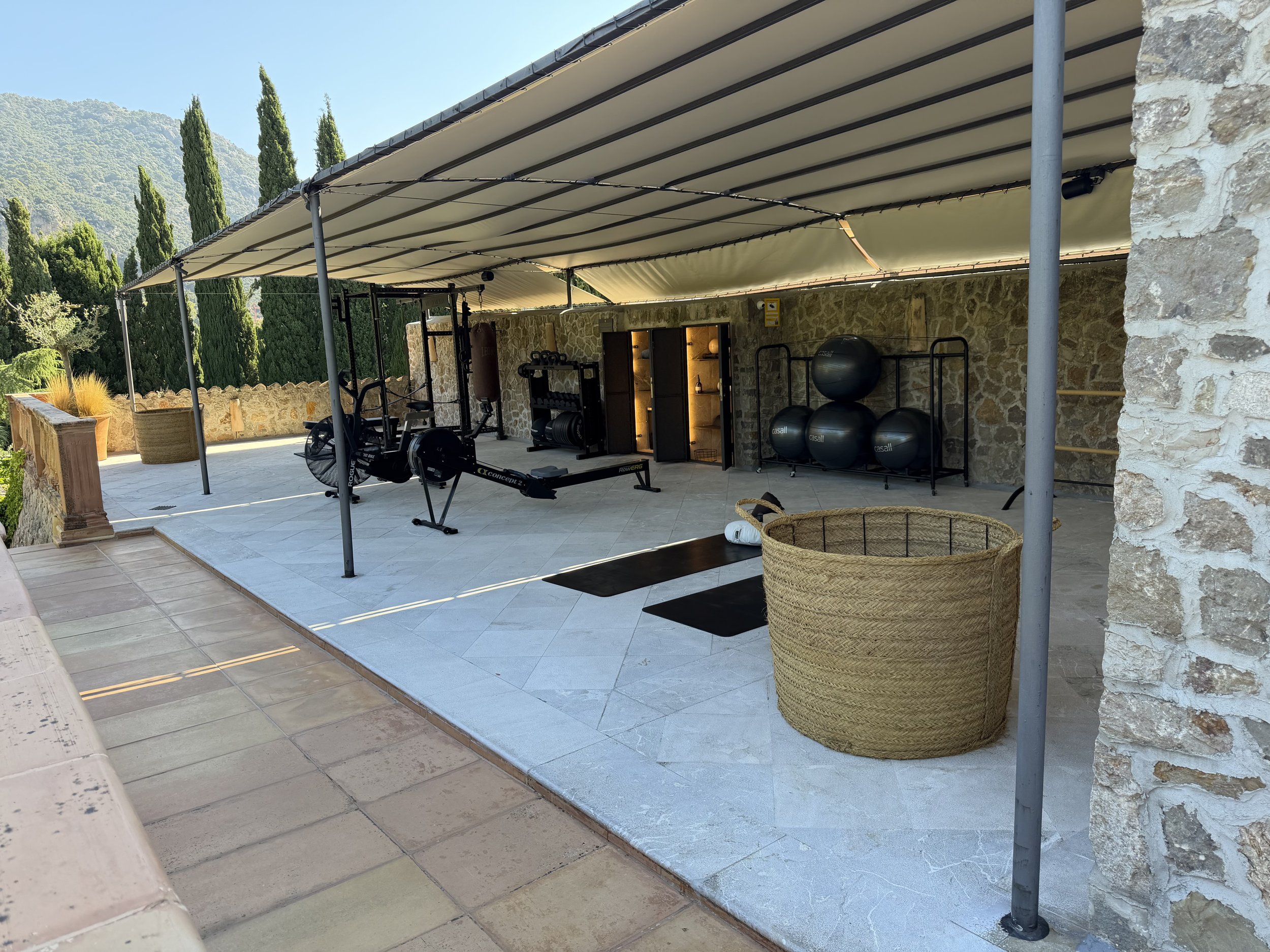
Hotel Valdemossa’s open-air fitness terrace, built around strength and conditioning fundamentals.
I was on holiday in Mallorca last month and spent a few nights at Hotel Valdemossa. Twelve rooms. A village that climbs up toward a monastery that has been standing for nearly 900 years. The kind of place where the architecture does the work and everything else gets out of the way.
I was not expecting the fitness setup to impress me. Most boutique hotels in Europe either skip it entirely or drop in a few pieces of branded cardio equipment in a windowless room and call it a wellness amenity. Hotel Valdemossa did something different.
They took an extra terrace and turned it into a strength and conditioning area without touching a single piece of historic architecture. Everything stayed intact. And instead of filling the space with machines or resort-branded equipment, they went back to the fundamentals. A full power rack. An adjustable bench. Various bars, Russian kettlebells, dumbbells, and bumper plates. A fan bike and a Concept2 rower for cardio-respiratory work. A clean, open section for barre, yoga, and core training. All of it outdoors. All of it under 1,500 square feet.
It was one of the most thoughtfully executed fitness environments I have seen in a boutique hospitality context. And I have spent nearly two decades designing these spaces for a living.
What made it work was not any single piece of equipment. It was the clarity of intent behind the design. The people who put this together understood that you do not need machines to deliver a serious, effective training experience. You do not need AI coaching software or screens or tech integrations. Those things can be useful. In the right context, they add real value. But they are not the foundation. The foundation is a well-loaded barbell, a set of kettlebells across a useful range of weights, a pull-up station, and enough floor space to move. That is what produces results. Everything else is a layer on top.
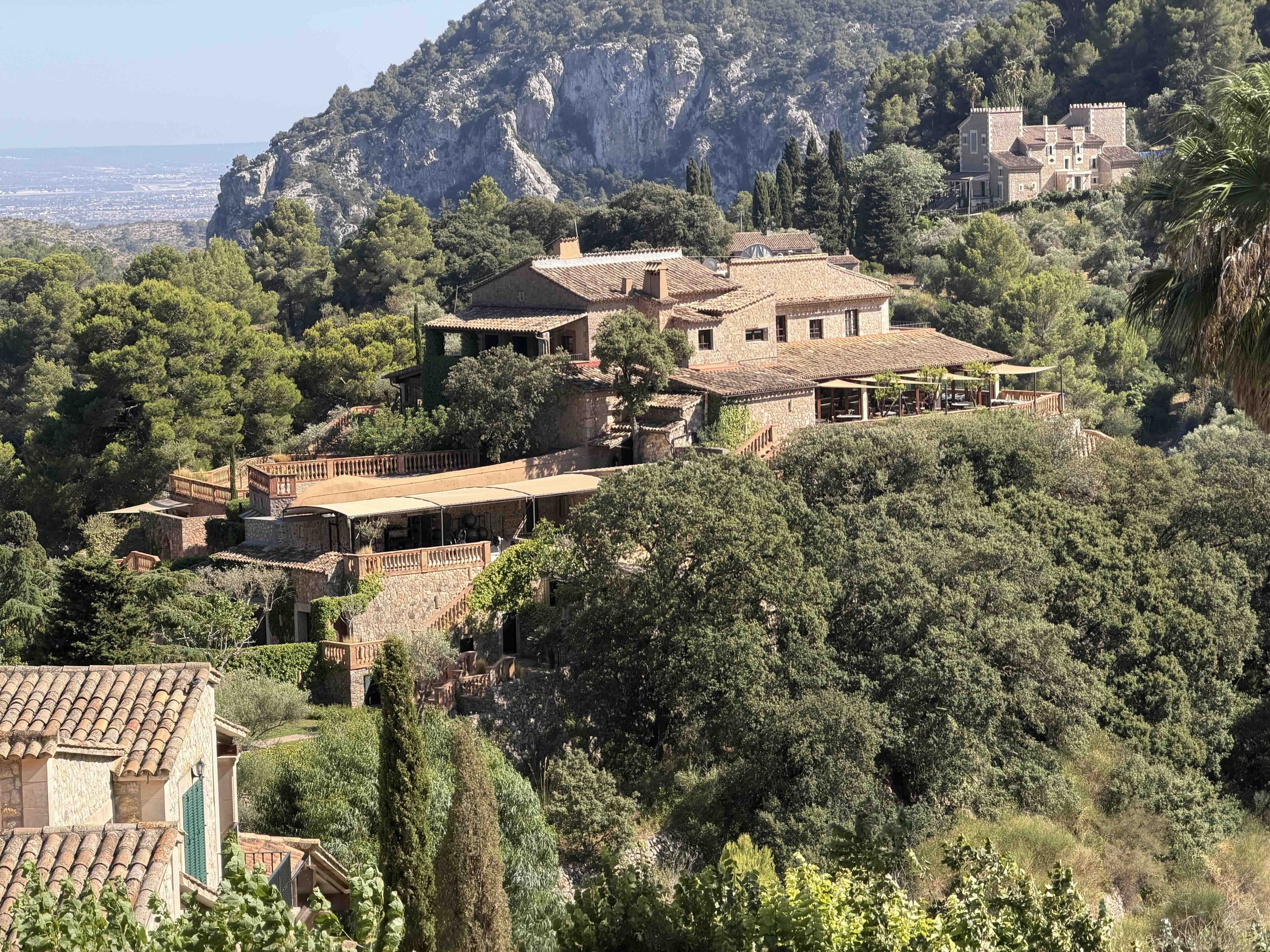
Hotel Valdemossa set within the surrounding landscape of Valldemossa, Mallorca.
The other thing they got right was the relationship between the training environment and the recovery environment. The fitness terrace is surrounded by the rest of the property, which is designed almost entirely for parasympathetic recovery. Stillness. Views of the monastery. Shade, warmth, and the kind of quiet that a medieval hilltop village produces without trying. You train hard, you create acute sympathetic stress on the body, and then you step directly into an environment that is set up to bring you all the way back down. Rest and digest mode. Full recovery. For the rest of the day.
That arc, from sympathetic activation to parasympathetic restoration, is not a luxury add-on. It is a physiological principle. It is how the body is meant to work. Hard effort followed by genuine recovery produces adaptation. Hard effort followed by more stimulation, more screens, more noise, more input, produces fatigue. The hotel figured that out and built it into the guest experience without calling it anything. There is no wellness programming brochure. There is no branded recovery protocol. It is just how the property is designed.
That is the lesson I took home from Mallorca. Not that every property needs to look like Hotel Valdemossa. The specific architecture, the village, the monastery, those are irreplaceable. The lesson is about the thinking behind the design. Start with the fundamentals of what the body actually needs. Build a training environment around those fundamentals instead of around equipment trends or brand partnerships. Then integrate that environment with the recovery experience around it so that the two work together as a single formula.
Most hotel developers and residential property teams are still treating fitness and wellness as separate line items. The gym goes in one room. The spa goes in another. A meditation app gets licensed for the resident portal. None of it connects. None of it is designed to produce the physiological arc that actually changes how a person feels after a day in your building.
A 900-year-old monastery in a Mallorcan village has more to teach the modern wellness industry than most people in it want to admit. The fundamentals have not changed. The body has not changed. What changes is whether or not the people designing these spaces are willing to start there.
Enjoyed this? Visit TheWrightFit.com or Performance Lab NYC.